The Joplin tornado through the voices of those who were there.

A few months ago I posted a handful of panoramic photographs I had shot the days following last year’s Joplin tornado.

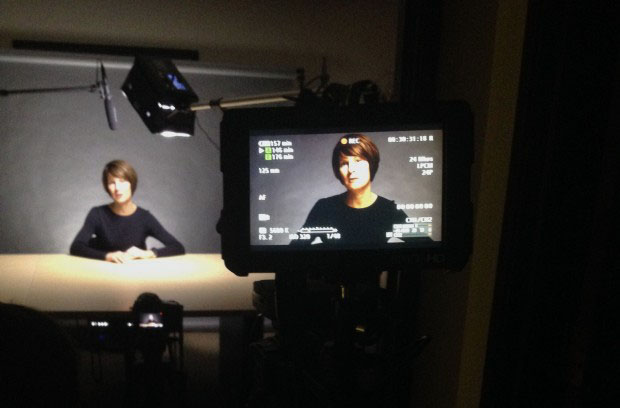
Over the days I was shooting these panoramic photographs, I was also recording the spoken stories of some of the people who had survived the tornado.  The interviews were quick. I just asked people to describe that Sunday afternoon as many people on the south side of Joplin, MO huddled in their homes or rushed to the scene to check on friends and family.

These are some of the stories I heard.  

I think the gentleman at the end, Stewart Cannon, sums it up pretty well when he says, “A photograph just doesn’t do it justice.  There is thousands of tons of rubble just scattered.  The only thing I can compare it to is a city being bombed or something.  It’s just huge.”  

Being a photographer who “speaks” in photographs I would like to disagree, but I can’t.  The size of the destruction is enormous. A photograph can do it no justice.

The panoramic photographs you see here are from a collection I made over a 2 day period.  The photographs are all “stitches”, that if I printed would all be about 10 feet wide. Since this series of photographs will probably never be shown anywhere, I thought it would be good to pair up the two, panoramic images and the voices.

It’s hard to believe that it’s been nearly a year since that Sunday afternoon in May.  I have been back to Joplin multiple times since the storm and am amazed by its transformation. This same part of town has now been nearly fully cleared of debris and resembles a moonscape. That will probably be part two of this ongoing project.

Leave a comment   Topic: random thoughts  

Wichita, Kansas – “Air Capital of the World”

Last week I spent a few days in Wichita, KS working on some photographs for a story that Arthur Sulzberger was doing for the Times.

It had been a few days since the news that Boeing would be pulling up shop and leaving Wichita by the end of 2013, ending an 80+ year relationship with the city.  So the story became not so much the fact that the city would be losing over 2,000 jobs, but more a look into how closely Wichita is tied to the aircraft industry.  Having grown up in Wichita and being aware of all the people that worked in the aircraft industry there, I was even amazed at just how integral Wichita has been in the production of airplanes over the last century.

With airplane producers like Cessna, Hawker Beechcraft and Boeing (three of the big ones) having large operations in Wichita, it’s clear Wichita, KS owns the moniker “Air Capital of the World”.

So here is Arthur’s story here which gets into some of the details.

Here are some images that ran and a few others I decided to post.

Downtown Wichita can be seen through the windows of the Kansas Aviation Museum. The land and buildings that now make up the Museum was the location of Wichita's original airport. It was all around this area of south east Wichita that the aviation industry grew up many decades ago.

Air Force One is worked on at the Boeing plant in Wichita, KS. The work on that aircraft will move to San Antonio with the closing of the Wichita Boeing operation.

A bronze sculpture of a B-52 airplane hangs on a wall in the Kansas Aviation Museum.

The displays inside the Kansas Aviation Museum tell the story of Wichita's tie to the aircraft industry. The planes on display here are a Stearman model 73 (back left), built in 1935, and a model replica of a Cessna 620 (right).

Cessna Street in Wichita is in the Planeview neighborhood which was a neighborhood created for Boeing workers during World War II.

The basketball court here is in Stearman Park. Stearman was an airplane producer in Wichita's early days of aircraft production.

Hanger 4 production line at Hawker Beechcraft.

Hawker 900's are lined up being assembled in Hanger 4 at Hawker Beechcraft.

The fuselage of a Boeing 737 waits in integration position #6 for assembly in the Spirit AeroSystems plant.

Tom Aikens works on adjusting the nose bay doors on a Premiere 1A aircraft in Hanger 4 at Hawker Beechcraft.

A picture of a Beechcraft Kingair hangs above the assembly line in Hanger 4 at Hawker Beechcraft in Wichita.

This is an empty integration position where the fuselage of a Boeing 737 is assembled in the Spirit AeroSystems plant. All the pieces of a fuselage for a Boeing 737 are brought into this space where it is assembled by workers.

An Air Force KC135 refueler does touch and go landings on a runway behind the Boeing plant in southeast Wichita Wednesday.

Hawker Beechcraft airplanes are lined up for assembly in Hanger 4 at Hawker Beechcraft.

Beechcraft Kingair's are lined up for assembly in Hanger 4 at Hawker Beechcraft.

Spirit AeroSystems sheet metal assembly worker Jeremy Walker works on assembling the fuselage of a Boeing 737 in the Spirit plant Wednesday. Walker has worked for Spirit for 10 months.

A tool box next to an integration position where the fuselage of a Boeing 737 is assembled in the Spirit AeroSystems plant.

Roger Pierce works on assembling a prop on a Beechcraft Kingair 350 in Hanger 4 at Hawker Beechcraft.

Former Representative Todd Tiahrt worked for ten years to get the tanker contract in Boeing's hands only for the company to leave the city he served after the contract was theirs.

Spirit AeroSystems employee's walk across Oliver Street to their parked cars after their shift was over at Spirit.

The displays inside the Kansas Aviation Museum tell the story of Wichita's tie to the aircraft industry. This is a painting of an old photograph of a 1927 Cessna AW with airplane workers standing on the wings to display its strength.

From the property of the Kansas Aviation Museum you can see the hangers that Boeing uses for their work in Wichita, KS. When Boeing leaves Wichita in 2013 those hangers will sit empty.

International Association of Machinists & Aerospace Workers (IAMAW) District Lodge No. 70 President Steve Rooney is a third generation Boeing employee. His daughter was a fourth generation Boeing employee.


Boeing employee Dave Robertson has worked for the aircraft company for nearly 35 years.

The Boeing plant is located in southern Wichita. They own 96 buildings that they use to work on airplanes.

Leave a comment   Topic: random thoughts  

Crystal Bridges Museum of American Art in Bentonville, AR

A few weeks ago, I was assigned to travel to Bentonville, AR to photograph the newly opened Crystal Bridges Museum of American Art for The New York Times.

I had heard some things about this Museum largely because there was a story behind the person who had donated a large chuck of the money to get the Museum started.

The Museum was the dream of Alice Walton, a Walmart heir.

Here is a link to the story by Times writer Roberta Smith, who visited the Museum before I did.  There is a slide show of some of my images there too.  Roberta’s story goes into a lot of detail about the collection and the buildings so I’ll spare you my bad writing.

The Museum is an impressive set of buildings with an equally impressive art collection and is worth traveling to visit if this is your cup of tea.

The buildings, designed by Moshe Safdie, are nestled into a wooded valley in the quaint northwest Arkansas town.  The buildings are something to see and at some point in the very near future there will be large ponds of water in between the interestingly shaped buildings.  The exterior photos will really be remarkable then.  When I visited the Museum, the ponds had been drained leaving the exterior images not as impressive as they will be once they are filled.

As always I have tons of photographs that never make it to the paper so I am trying to be diligent about posting them here for folks to see.  Here is a collection of images from the day.

I look forward to traveling down to Bentonville with Sarah and Evy in the future.  It would make a great day trip or even better over night trip.  Bentonville seems very quaint with lots of charm and mountain bike trails seem to abound in the area.  I spotted what looked like some good twisty single track in a neighborhood near the Museum!


As art patrons visit the new Crystal Bridges Museum of American Art in Bentonville they will see an instillation by artist Roxy Paine.

The Crystal Bridges Museum of American Art opened last month and now visitors are coming to Bentonville, AR to view the large collection of art.

Gallery six.

Joseph Stella's "Red Flower", circa 1929, in gallery five.

John Baldessari's "Beethoven's Trumpet (With Ear), Opus #132 Reverse"(left), circa 2007, and Nick Cave's "Soundsuit", circa 2010.

Gallery six.

Visitors can eat lunch in one of the buildings at the Museum.

Gallery six is home to more contemporary art including a painted sheet metal piece from artist Alexander Calder, circa 1968.

The Walton Family Foundation is a donor to the Museum.

Patrons make their way through the Museum's hallways.

The Museum is made up of a collection of buildings and is nestled into a wooded ravine in Bentonville.

The ponds of water will be refilled soon which will change the appearance of the Museum.

Art patrons take a look at Charles Willson Peale's "George Washington", circa 1780-1782, on display in galley two. George Washington posed seven times for Peale.

The curved walls and ceilings are visible throughout the whole Museum. This is galley three.

An art patron favorite, Artist Norman Rockwell's painting "Rosie the Riveter", circa 1943.

The detail on the frame of Artist Norman Rockwell's painting "Rosie the Riveter" is amazing.

Frederick Eversley's "Big Red Lens", circa 1985, in gallery six.

Gallery six.

Throughout the Museum there are "reflection areas" set up where visitors can take a break and look through art books and museum information on iPad's on the walls.

Gallery five.

Devorah Sperber's "After The Last Supper", circa 2005, in the Wonder World exhibit.

The "After The Last Supper" piece is described as being made of 20,736 threaded spools, hanging apparatus, ball chain, viewing sphere and stand.

Stuart Davis' "Self-Portrait", circa 1912, on display.

Architect Moshe Sofdie designed the Crystal Bridges Museum of American Art in Bentonville, AR.


Leave a comment   Topic: random thoughts  

Story on Rural Post Offices in Arkansas for the New York Times

The end of last week I traveled to central Arkansas to work on a story about rural Post Offices that are scheduled to be closed in 2012 as part of an attempt at cost savings for the struggling U.S. Post Office.

You can read Campbell Robertson’s story here and see a slide show of images too.

My job was pretty open, meaning they just wanted me to go shoot the Post Offices that Campbell had gone to.  With a little organizing I realized this would be the quickest photo essay I would ever shoot!

I had six Post Offices to stop at over a two day period before a 6pm job in Joplin, MO the following day, Friday.  So at 10:30 a.m. Thursday, I hit the road on a journey that would clock in around 700 miles.  I had my schedule laid out to where I could spend no more than one hour at each Post Office over the two days and still make it to Joplin in time.

I became clear, very quickly, that I needed to try to make photos of people that these closures would effect and also paint a picture of what these communities and rural Arkansas look like.   That would be my point of view, scenes from the road, which considering the time frame I was under, turned out to be the best decision.

I met some great people in my quick pass through these towns and in the end I made it to Joplin with 45 minutes to spare!

These are some of the images from the trip.

Enjoy.

The Witts Springs, AR post office is currently set to stay open even though it was on the original closure list.

Through the front door of the Prim, AR post office homes in the small town can be seen. The Prim post office is on the closure list.

The post office/grocery store and the local church are the two non-residential buildings in town.

Elaine Elliott(right) walks to the post office with Sue Elliott to pick up Sue's mail Friday in Fox, AR. The two live close to the post office and say they enjoy being able to just walk to the post office to pick up their mail.

Flint Bradford raises the American flag as the sun rises over the post office in Ida, AR. Ida's post office is set to close this year.

The post office in Tilly, AR is a gathering spot for the locals.

A wooden cross along Highway 263 leading to Prim, AR.

Scenes from the highway between Tilly, AR and Witts Springs, AR.

Panoramic stitched photograph of Prim, AR post office.

Zip Code 72546 - Ida, AR.

Tilly, AR resident Danny Casto says he will "raise hell" until they take the Tilly post office off of the closure list.

A plastic bass mailbox along Highway 263 leading to Prim, AR. If the Prim, AR post office closes, residents will have to travel to another town to get mail from their PO Box or put up a mailbox to receive their mail.

PO Boxes in Fox, AR.

Flint Bradford gets his daily mail delivery from mail driver David Schmidt.

If you find yourself lost and without cell service near Tilly, AR there is a pay phone across the street from the post office.

The restrooms in the Witts Springs, AR town park are designated men and women.

Highway 263 leading into Prim, AR where the towns post office is set to close this year.


J.D. Sutterfield(left) and Rip Bonds(right) wait for their mail to be put into their PO boxes Friday at the Fox, AR post office. The two said they do not want to get a mailbox they want their post office to stay open.

Junk cars at the edge of town in Witts Springs, AR.

An homage to the Pony Express hangs in the Fox, AR post office.

The Fox, AR post office is set to close.

Rip Bonds(right) waits for his mail to be put into his PO box Friday at the Fox, AR post office.

For the moment, the lights will stay on at the post office in Witts Springs, AR. It was set to close but that decision has changed.

Comments (4)   Topic: photojournalism, random thoughts  

11 – 11 – 11 Veterans Day

Driving around town today, I came across this large group of American flags on a hillside with a large sign saying “Thank You Veterans”.  My mind instantly flashed to the faces of the many military friends I have and the places I had been to over the past decade.

My mind also drifted to a warm day in the Philippines a few years ago when I “met” my great Uncle Oliver for the first time.

My grandfather used to tell the story about how he was all set to go to Europe with his Army unit but weeks before he was to ship out, he was in a car accident and shattered his arm and was unable to go with his unit.  His unit was completely wiped out during the D-Day invasion.

If prodded, my grandfather would also talk about his brother Oliver, who was killed in the Pacific during World War II.  Oliver’s remains were never brought back to the States and my grandfather said he had been buried in the Philippines, he thought.

A few years ago I travelled to the Philippines to work on some photographs for a photo book project that I hope to finish some day.  When I arrived in Manilla, I got picked up by my friend Ken and once I got settled into my hotel, I asked him to take me to the large U.S. military cemetery in town.  I had my great Uncle’s name and a few other small bits of information about him and we set out to try and locate his burial plot.

Ken and I made our way over to the Manila American Cemetery and Memorial and with some assistance found Oliver’s marble cross at Plot A Row 9 Grave 166.

There he was.

Never once visited by a family member.

Surrounded by thousands of other veterans who  never made it back to the States.

A man cleaned his grave site and made a ‘rubbing’ for me.

I would keep that rubbing of Oliver’s name protected for a month until I returned home where I sent it, along with some photographs, to my grandfather.

I still remember my quiet grandfather calling me after he got the rubbing and he thanked me many times over, saying that he and his remaining siblings were joyed to see where their brother was buried.

Having covered the conflicts in Iraq and Afghanistan for many years and attended the battlefield memorials of friends, it was not lost on me that one day many years ago, Oliver had left his home to fight in a war and he had never returned home.

It had been over 60 years since Oliver’s death and my grandfather was able to see his brother’s final resting spot for the very first time.  I found that fact very gratifying and extremely sad in the same breath.  I wondered, even today, how many Oliver’s are there in these foreign cemeteries around the world.

Here are some of the photographs of that day.

Oliver Hebert's final resting place in the Philippines. Plot A Row 9 Grave 166.

Oliver Hebert. One of over 17,000 military dead buried at the cemetery.

Making a rubbing of PFC Oliver Hebert's name.

The entrance to the Memorial.

A beautiful mosaic art piece is in a Chapel there.

The walls of the Memorial.

The names of two other Hebert's from Louisiana are etched in the limestone tables of those missing in action.

Over 36,000 names of those missing in action are carved into the walls of the Memorial


Leave a comment   Topic: random thoughts  

Kansas City’s International House of Prayer

A few weeks ago I was able to spend the day at Kansas City’s International House of Prayer (IHOP) when New York Times reporter Erik Eckholm came to town to work on a story for the paper.

IHOP is an interesting place and is filled with a wide range of believers: young, old, white, black, asian, hip and the square.  This is not your typical church.  If you are used to traditional hymns and ‘quiet time’ with God, well you won’t find that here.  You will find people having ‘quiet time’ with God, but it is NOT quiet inside the church’s prayer room.

The prayer room is open 24 hours a day, 365 days a year, where people pray around the clock.  That in itself is interesting, but there are a few other details that make this experience a little more unique.

First there are about 12 video cameras in fixed positions and on sliding rails around the prayer room live streaming the worship.  A sign at the entrance of the prayer room tells those entering that they are giving IHOP permission to use their image anyway the church likes.  The church has a state of the art production suite outside the prayer room that puts together the streaming camera views and broadcast it to the web.  That production suite is something you might see in a big TV news office in a big city.

Second, there is music being played 24 hours a day by staff members of IHOP.  The music is contemporary christian music and never stops.  Ever.  The performers play two hour segments and have worked out a routine to where there is never a lull in the music, it plays constantly.  Quite an accomplishment considering it has been going on for over a decade.

IHOP is a big organization that has several different properties around the Kansas City/Grandview area.  IHOP even has a coffee shop, book store, reality company, apartment complex and a University that will educate around 2,000 students this upcoming semester.  They recently purchased over 100 acres of land near their IHOP University location that some day may be built on.

Erik’s story has all the details that I won’t rehash.  You can visit the Times’ site and read his story here.  His story is great and the paper ran about 10 photographs or so online (not sure what ran in the paper) but I thought I would add a few here so you could see a little more.


Leave a comment   Topic: photojournalism, random thoughts   Tagged: , , , ,  

Panoramic photographs from Joplin, Missouri

I travelled to Joplin, MO the morning after the EF-5 tornado destroyed an estimated 30% of the large southwestern Missouri town.  Monday was a dreary rainy day and I decided to ditch my car and walk through what was now the largely destroyed southern part of Joplin.  I only had a few hours on the ground before I had to try and file some photographs but as I walked and talked with folks it was absolutely clear to me that you could not capture the size of the destruction in one single frame from a 35mm digital camera.

So I decided I needed to do something a little different than I normally would do.  Over the next week, I would come back a few days and do strictly panoramic photographs of the city.  To me, this was the best way to fully capture the scale of the devastation and the flattened look of the city.  I had never tried to make a panoramic photograph so I had a little learning to do before I came back.

As always, it is impossible to fully capture the true feeling of most disaster scenes without someone actually taking it in, with all their senses, by themselves.  That was and is true for this Joplin tornado.

The destruction is enormous.  Homes have been turned to splinters.  Cars have been tossed all around. Trees have been stripped of bark and limbs.  The landscape looks nothing like it once did.

This New York Times multimedia piece shows that landscape change with a Google Street View.  The before and after views are quite stunning.  http://www.nytimes.com/interactive/2011/05/27/us/joplin-panoramas.html?ref=us

The loss of life is enormous.  This tornado is the most deadly in many many decades.  However, looking out across the swaths of this leveled city it is hard to fathom how more people were not killed.  Hearing people recount their stories of riding out the tornado in their bathtub knowing they were moments from death still brings me chills.

These photographs are part of the new history of the city of Joplin.

I have shot around 30 panoramic photographs in Joplin. While doing these photographs, I also did a few panoramic “portraits” of storm survivors and recorded the audio of them recounting their stories of the storm and where they go from here.  I will be putting that together in the next few weeks as I have time.

Each panoramic photograph was stitched together from a collection of vertical photographs I made at each scene.  Some were shot on a tripod some were handheld.  I “stitched” them together in an automated program in Adobe Photoshop CS5.

I plan on returning back to Joplin every month or two to try and shoot from the same places to document what happens to this city and the people there.

I hope those future panoramic’s will show Joplin raising out of the destruction to something better than it was before.

Here are a few frames.

Hampshire Terrace Apartments off of 20th Street

The back of the Suskey home at 22nd and Pennsylvania

2424 Wall Ave

Joplin High School

Stone House 2386 Kentucky Ave

Greenbriar Nursing Home 2502 South Moffet Ave

St. Mary’s  589 West 25th Street

24th Street

Leave a comment   Topic: photojournalism, random thoughts   Tagged: , , , , ,